
As an international wholesale buyer, sourcing custom furniture from Indonesia presents a lucrative opportunity to access high-quality, legally compliant products. With the right understanding of export logistics and compliance, you can smoothly integrate Indonesian craftsmanship into your supply chain, meeting Australia’s market demands efficiently.
Understanding SVLK Certification and Compliance
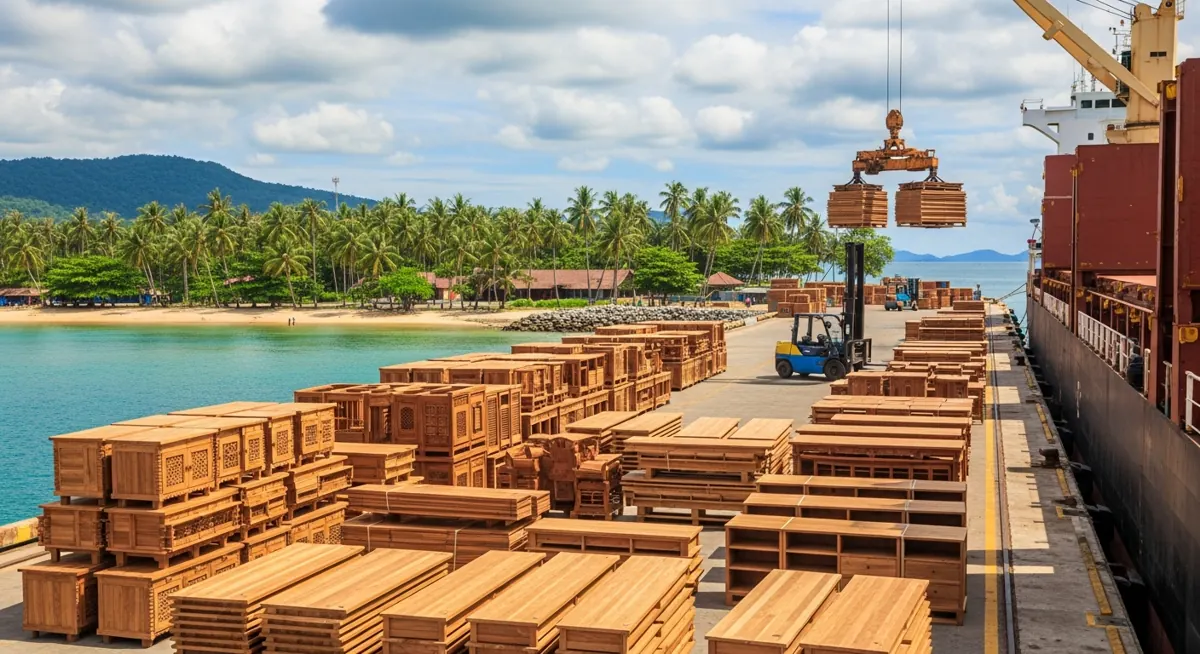
The SVLK (Sistem Verifikasi Legalitas Kayu) is an essential certification for Indonesian wood-product exporters. It ensures that timber is legally harvested and traceable. This mandatory certification is integral to Indonesia’s FLEGT partnership with the EU, providing substantial legality evidence for compliance with the EU Deforestation Regulation (EUDR) and the US Lacey Act. However, importers still retain their due diligence responsibilities. The SVLK certification is valid for three years, with annual surveillance checks. While some factories may offer FSC as an additional voluntary sustainability certification, SVLK remains the baseline for legality. Understanding these certifications is crucial for international buyers, as they assure the legality and traceability of the materials used in your products.
Optimizing Container Loads for Export
Efficient container loading is critical for cost-effective furniture export to Australia. A 20ft container holds approximately 28 CBM, while a 40ft container accommodates about 58 CBM. For larger volumes, a 40ft High Cube (40HQ) offers around 68 CBM. The nature of your furniture affects how it fills a container; bulky upholstered or woven items typically cube out before reaching weight limits, whereas dense knock-down items may hit weight limits first. Understanding these dynamics helps in planning your orders and maximizing space utilization. Ensure your orders meet the per-item minimum order quantities (MOQs) — typically 5-20 pieces for solid-wood and 10-30 pieces for woven/rattan items — and the minimum container CBM requirements to optimize shipping costs.
Minimum Order Quantities and Mixed Loads
When sourcing from Indonesia, understanding the minimum order quantities (MOQs) is crucial. For solid-wood furniture, the MOQ usually ranges from 5-20 pieces per item, while woven or rattan furniture requires 10-30 pieces per model or color. The typical minimum order is a 20ft container, approximately 25-28 CBM. Indonesian suppliers commonly allow mixed-model and mixed-material containers, provided each item meets its MOQ and the overall load meets the minimum CBM. This flexibility is advantageous for buyers seeking a diverse range of products without exceeding order limitations. By strategically planning your order, you can efficiently meet market demands while adhering to supplier requirements.
Key Incoterms and Export Ports
The choice of Incoterms significantly impacts your export logistics and costs. FOB (Free on Board) is the most common term, where the seller handles export clearance and loading at the Indonesian port, and the buyer takes responsibility for sea freight and insurance. Other terms like CFR/CNF (Cost and Freight) and CIF (Cost, Insurance, and Freight) are also available. Understanding these terms helps in negotiating favorable trade terms and managing logistical responsibilities effectively. The main Indonesian seaports for furniture export include Tanjung Perak in Surabaya, Tanjung Emas in Semarang, and Benoa in Bali. These ports are strategically located to facilitate efficient shipping to Australia and other international markets.
Production Lead Times and Shipping Duration
Coordinating production and shipping schedules is vital for timely order fulfillment. Production lead times typically range from 30 to 60 days, depending on order size and finishing requirements. Once production is complete, sea-freight transit to Australia takes approximately 3-5 weeks, subject to route and seasonal variations. It’s essential to confirm current schedules with your logistics provider. By aligning your production and shipping timelines, you can ensure a smooth supply chain operation, minimizing the risk of delays. This strategic planning is crucial for meeting market demands and maintaining customer satisfaction.
Payment Terms and Financial Planning
Understanding the financial aspects of furniture export is crucial for successful transactions. Typically, a deposit of approximately 30-50% via T/T (bank transfer) is required to start production, with the balance payable against a copy of the Bill of Lading (B/L). These terms are negotiable, particularly for repeat buyers, allowing for flexibility in financial planning. Familiarizing yourself with these standard practices ensures transparency and trust in your transactions. Always confirm specific payment terms per order to avoid misunderstandings and ensure smooth financial operations.
Materials and Design Customization
Indonesian furniture is renowned for its quality materials and design versatility. Common materials include solid teak, reclaimed/recycled teak, mahogany, suar/acacia, natural and synthetic rattan, water hyacinth, seagrass, genuine leather, and stone/terrazzo tops. Each material offers distinct aesthetic and functional benefits, allowing buyers to select based on specific market needs. Indonesia’s design flexibility supports OEM/ODM manufacturing, allowing buyers to produce furniture to their specifications, including custom finishes and branding. Engaging with Indonesian suppliers provides access to diverse, high-quality materials and design capabilities that can enhance your product offerings.
Quality Control and Assurance
Ensuring the quality of your imported furniture is paramount. Indonesian manufacturers often adhere to stringent quality control processes, which include multiple inspection stages. These stages typically involve raw material inspection, in-line production checks, and final pre-shipment inspections. Buyers can also opt for third-party quality assurance services to verify compliance with their specific standards. Understanding the quality control processes in place can help you mitigate risks and ensure that the products meet your quality expectations. By maintaining open communication with suppliers and setting clear quality benchmarks, you can achieve consistent product quality.
Packing and Packaging Standards
Proper packing is crucial to protect furniture during transit. Indonesian exporters typically use high-quality materials such as corrugated cardboard, foam padding, and plastic wrapping to safeguard products. Export-standard packaging often includes detailed labels and documentation for easy identification and customs clearance. Some buyers may require additional packaging specifications, such as moisture-resistant materials or reinforced crates for delicate items. Understanding and specifying your packaging requirements can prevent damage during shipping and ensure products arrive in excellent condition. Collaborate closely with your suppliers to tailor packaging solutions that meet your logistical needs.
Finishing and Customization Options
The finishing process plays a significant role in the final appearance and durability of furniture. Indonesian manufacturers offer a wide range of finishing options, from natural and stained wood finishes to painted and lacquered surfaces. Custom finishes can enhance the aesthetic appeal of products, aligning with market trends and consumer preferences. Buyers can specify finishes that highlight the natural grain of the wood or opt for more contemporary looks. Additionally, customization options extend to hardware, upholstery, and decorative elements, allowing for a tailored product offering that meets specific design criteria.
For detailed guidance on the furniture export shipping process or to discuss your specific requirements, please contact us. Our team is ready to assist you in complexities of importing furniture from Indonesia. Request a quote today to explore your options and optimize your sourcing strategy.